
JVV 0662
Delft, circa 1700
Attributed to The Metal Pot or The Rose pottery
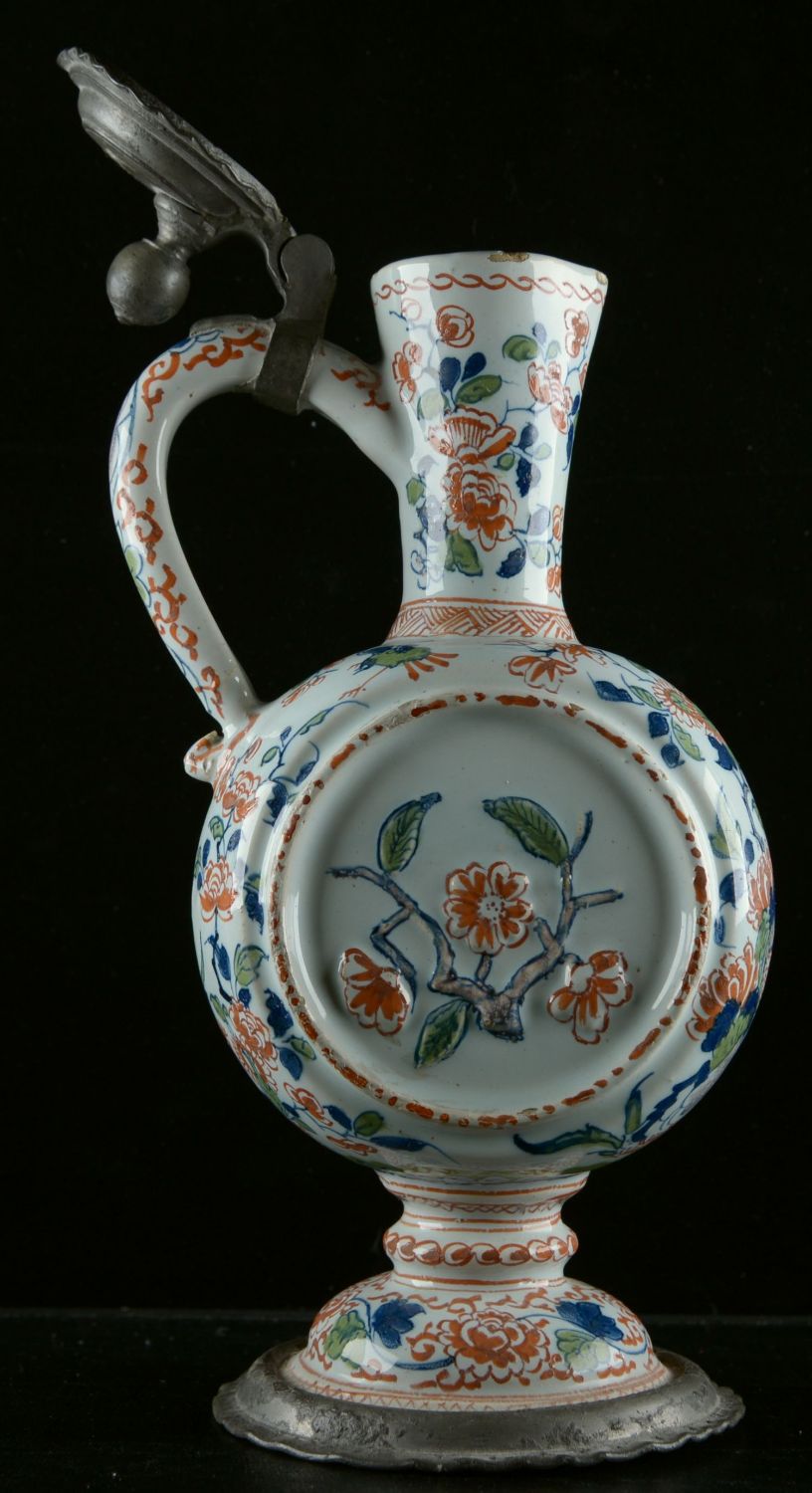
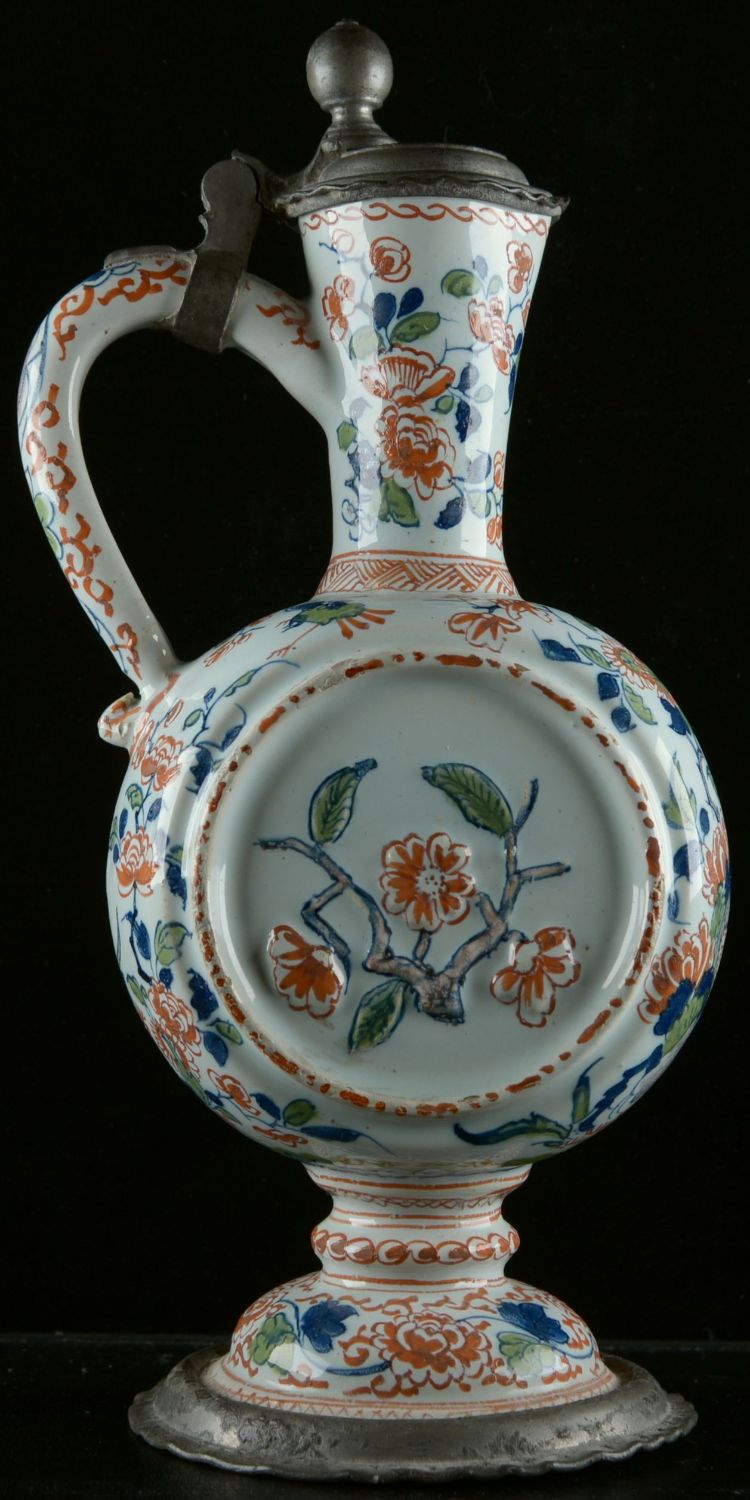
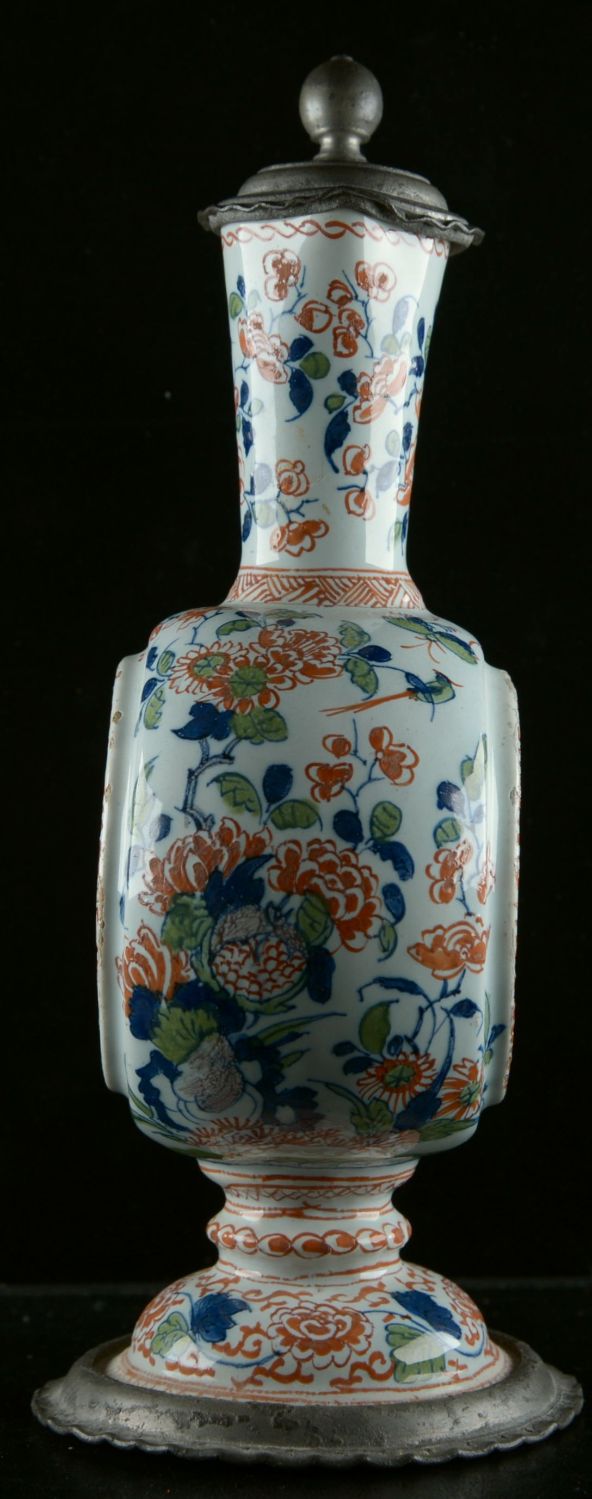
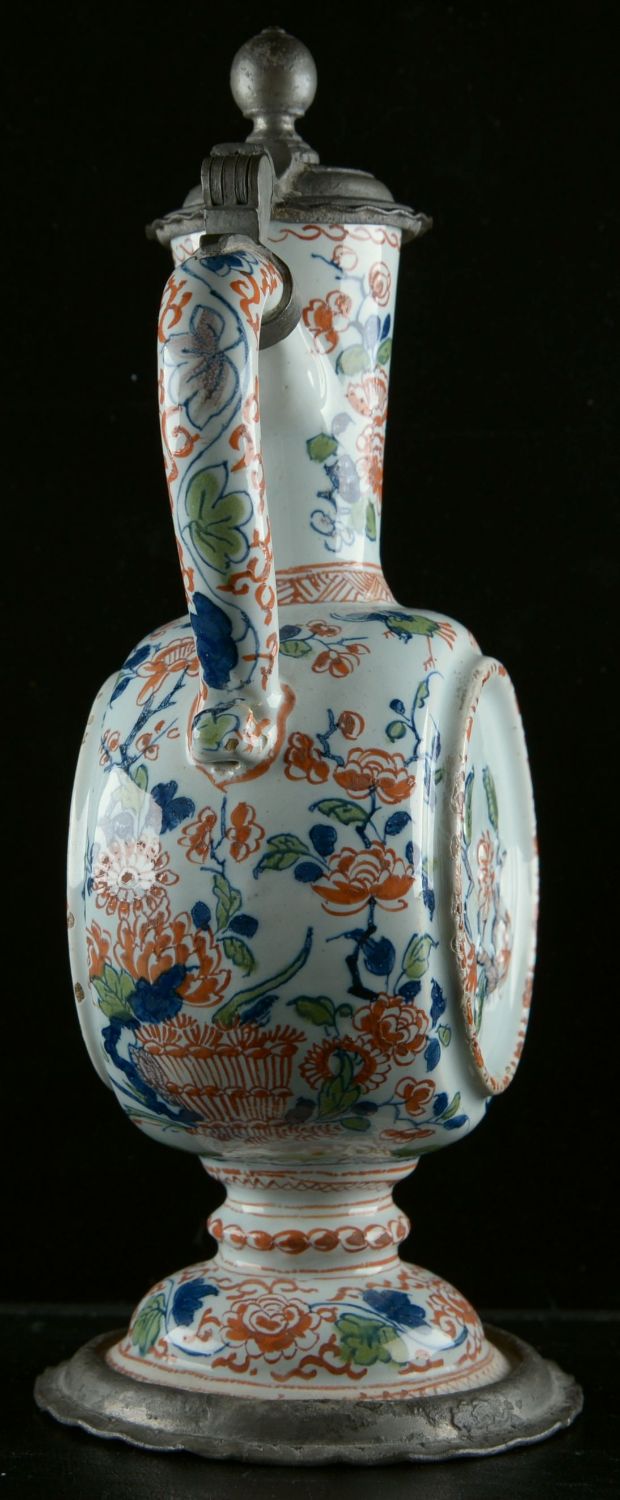
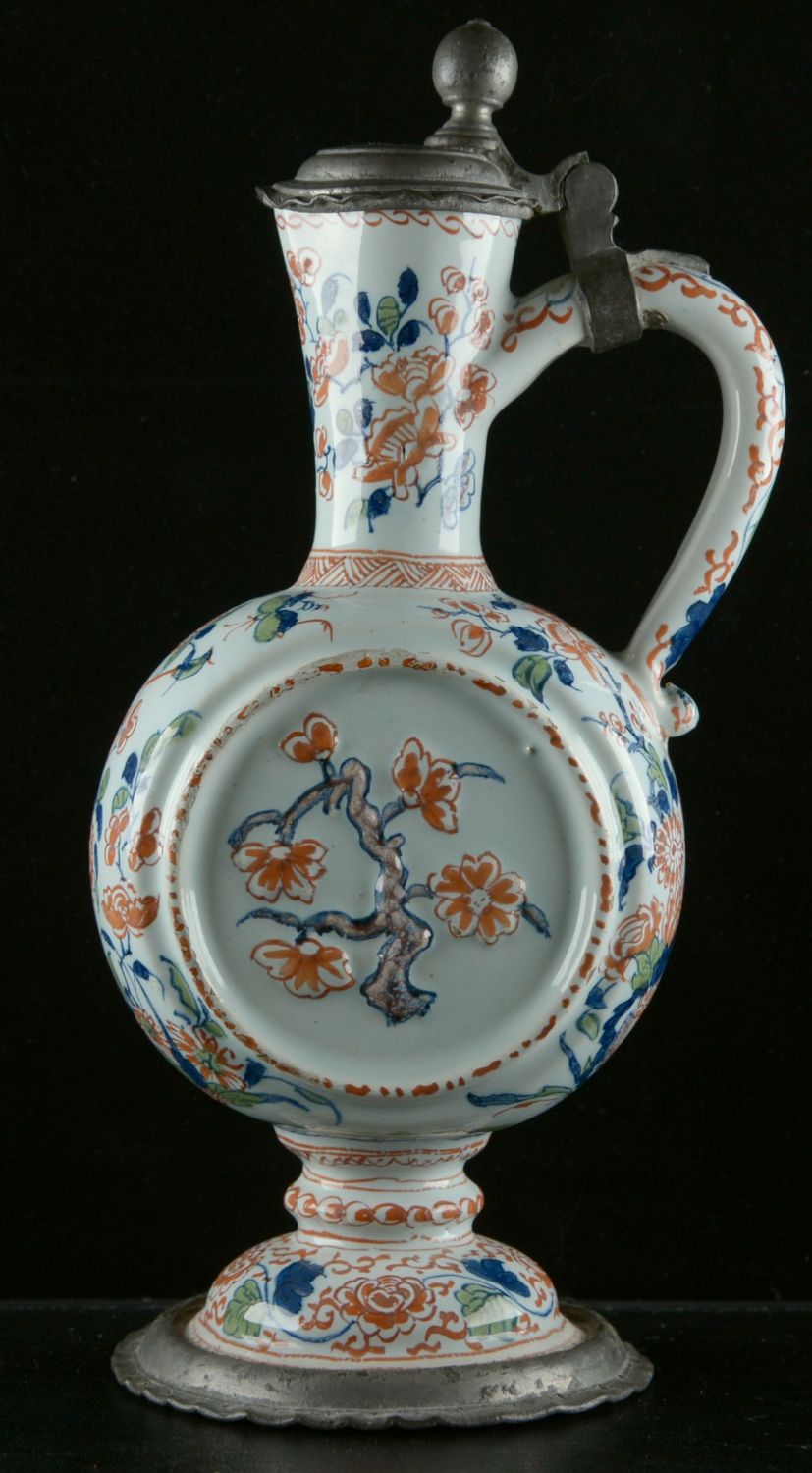
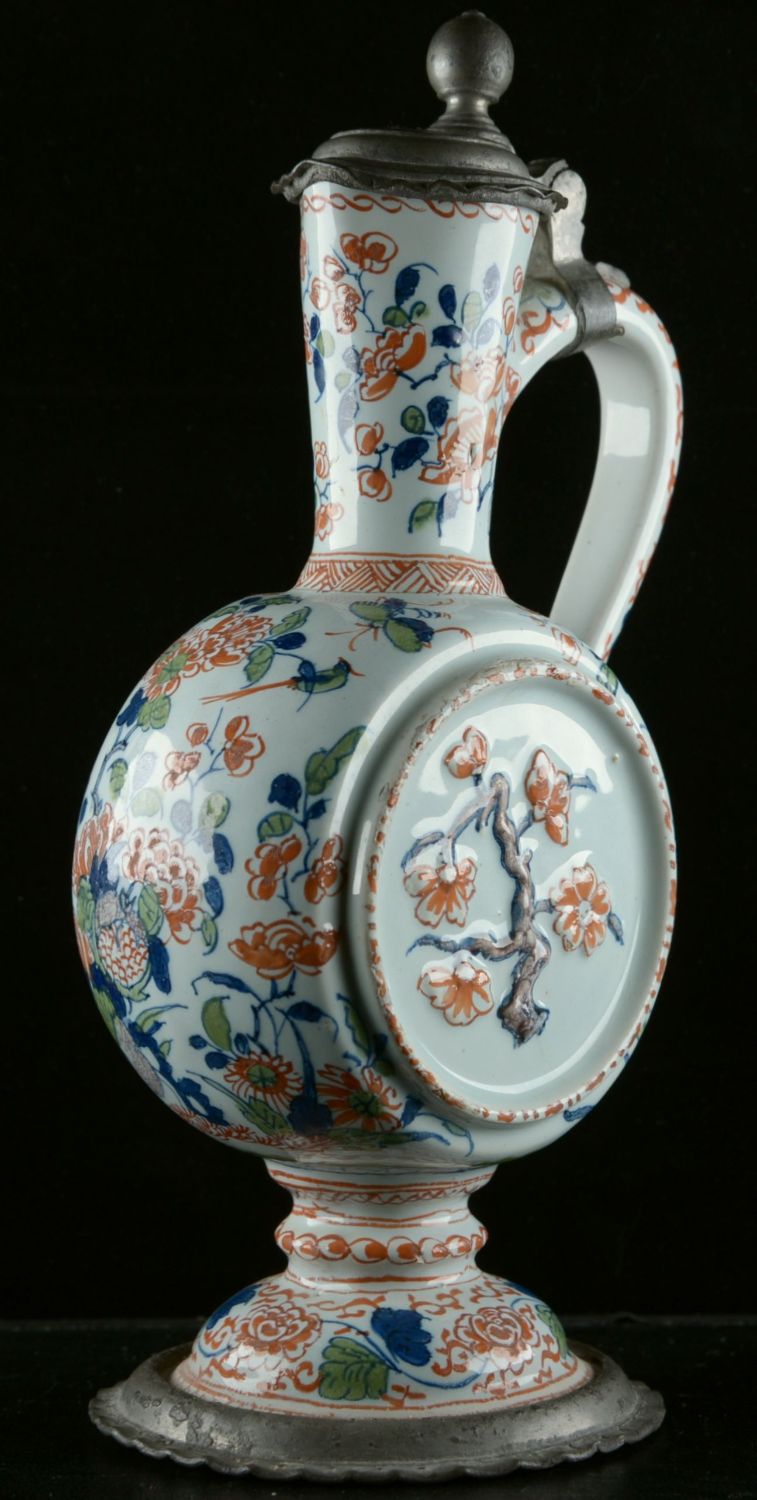
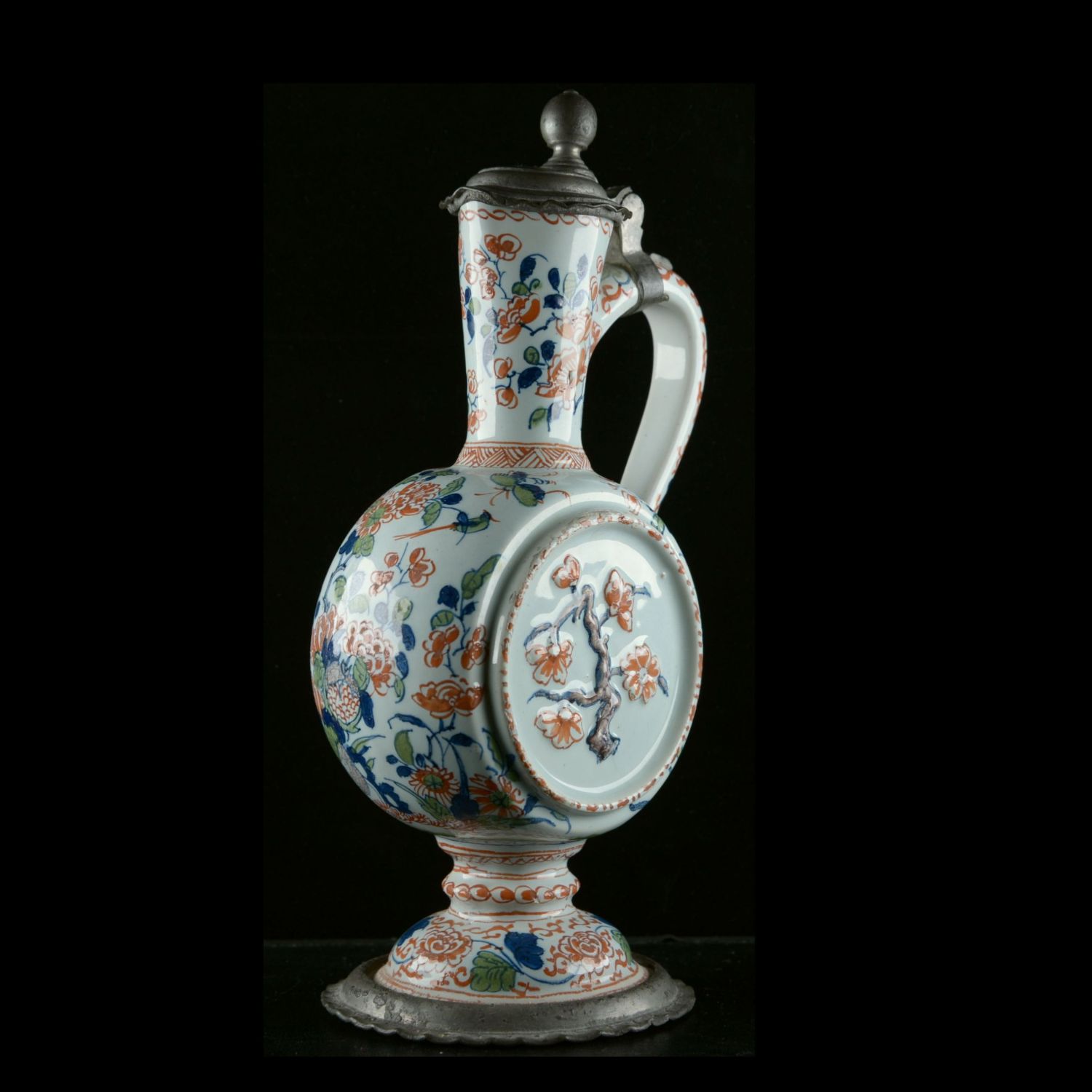
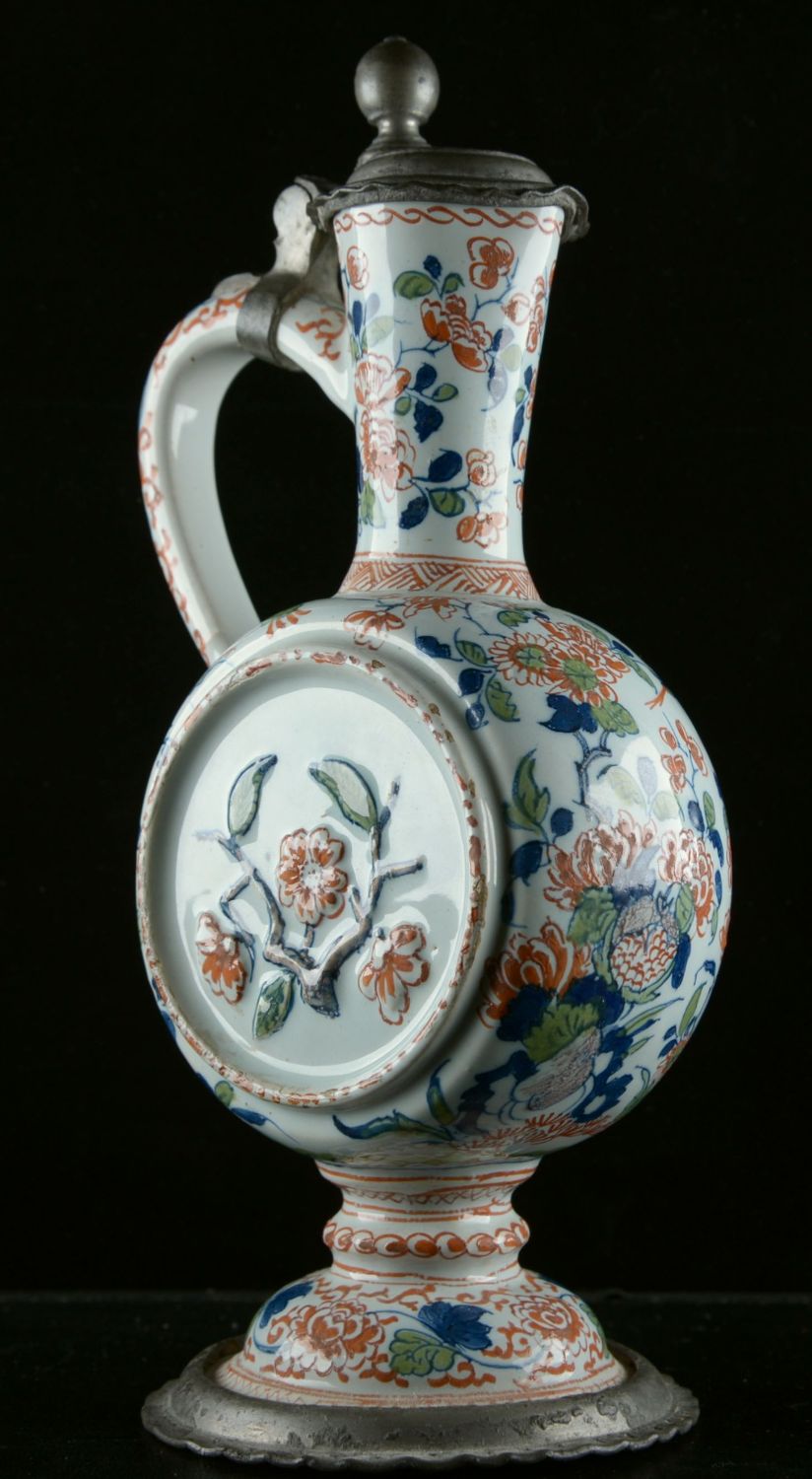
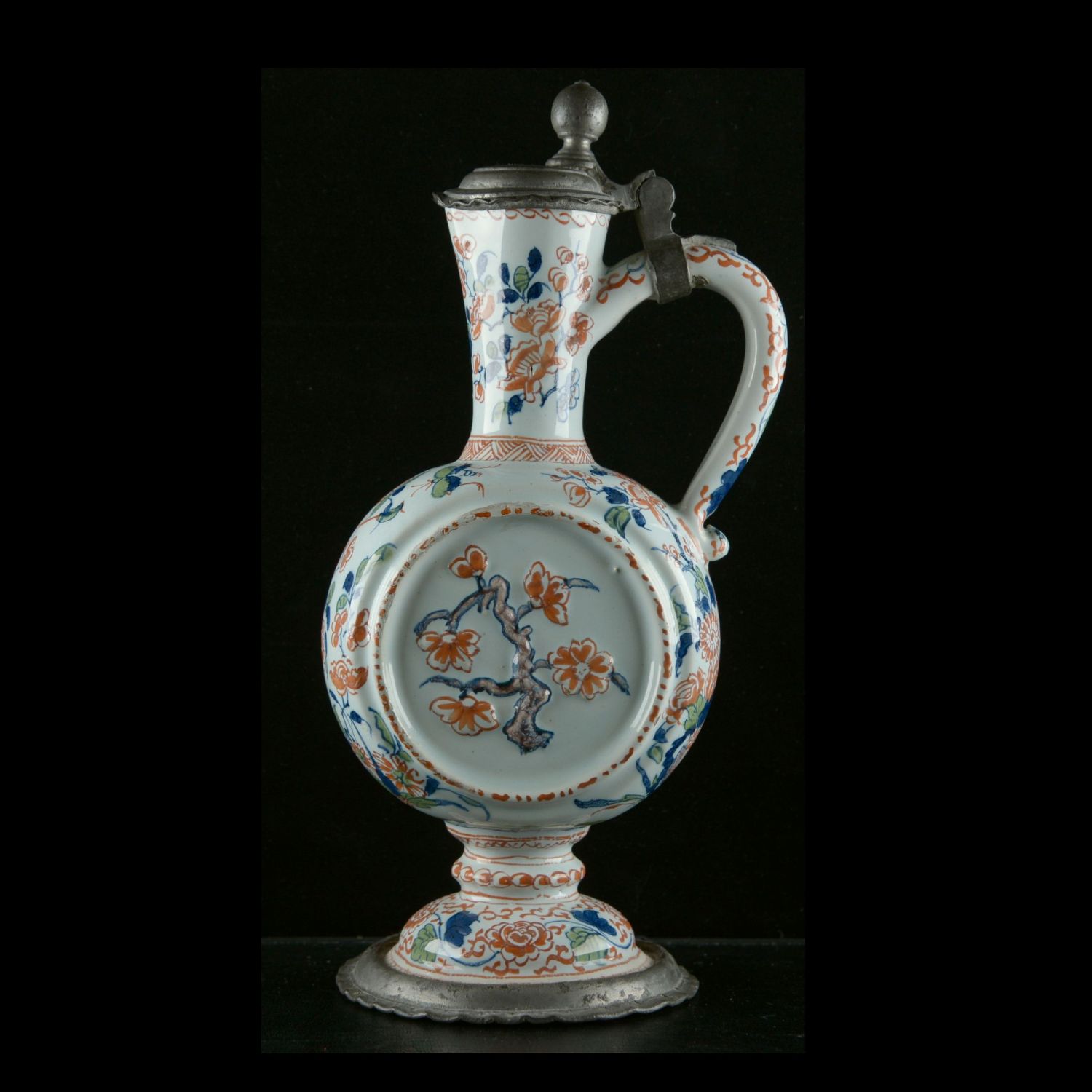
The ewer stands on a waisted foot, has a circular body and a slightly conical neck with a spout. The ear-shaped handle ends in a scroll. The body and neck are painted with branches of flowers and leaves featuring two birds and an insect, whilst the base is adorned with floral and leaf scrolls. The recessed sides are decorated in relief with a branch of prunus. The ewer is fitted with a pewter lid with a spherical thumb rest, and is marked with a crowned rose between the initials ‘IC’ and ‘P.’. It was made in Germany around 1700. A pewter foot ring is fitted around the base.
Dimensions: height 21 cm / 8.26 in. (24,8 cm / 9.76 in. with pewter cover)
Provenance: Aronson Antiquairs 2010, collection of Mr. Jan Visser and heirs, Heemstede, The Netherlands
Similar examples
A cashmere teapot with a circular body, recessed sides and embossed decorations, appeared in Aronson in 2009 (p. 59, no. 37). The piece is marked ‘Roos’ for The Rose pottery and can be dated to around 1700. An almost identical example in blue and white is illustrated in the 2011 catalogue of Salomon Stodel Antiquités (pp. 92–93, no. 28). This teapot was produced at The Metal Pot pottery and is marked ‘LVE’ and ‘G’ (Lambertus van Eenhoorn, circa 1700).
Explanatory note
The ‘G’ mark on the base of the blue-and-white teapot is thought to be that of Guilleaume Neuilleth, a sculptor and maker of (red) teapots (Stodel, pp. 93 and 125). He was originally from France and worked at The Metal Pot in Delft from 1691 onwards. Given the close resemblance between the teapot and this cashmere ewer, the latter may also have been designed by Neuilleth. The cashmere decor was developed in Delft around 1700 and remained popular until about 1730. The colour palette is blue, green and red, sometimes with additional colours black, purple or yellow. The decorations are mainly flower vases and floral motifs derived from Chinese porcelain. These were often combined with ornaments developed in France, such as lambrequins and point work (palmette-shaped panels or cartouches). The cashmere decor was applied to multiple Delftware items such as garnitures, ewers, vases, beer mugs, bowls, dishes, tea pots and canisters, often in a ribbed version.
Literature
R.D. Aronson, Dutch Delftware. Including selections from a distinguished Manhattan Collector, Amsterdam 2009
R.D. Aronson, S.M.R. Lambooy, Dutch Delftware. Including ‘Facing East: Oriental Sources for Dutch Delftware chinoiserie figures’ and highlights from the Mr. J. Visser collection, Heemstede, and the Stigter-Gysberti Hodenpyl collection, Singapore, Amsterdam 2010
J. Estié, Salomon Stodel Antiquités, Amsterdam 2011


